
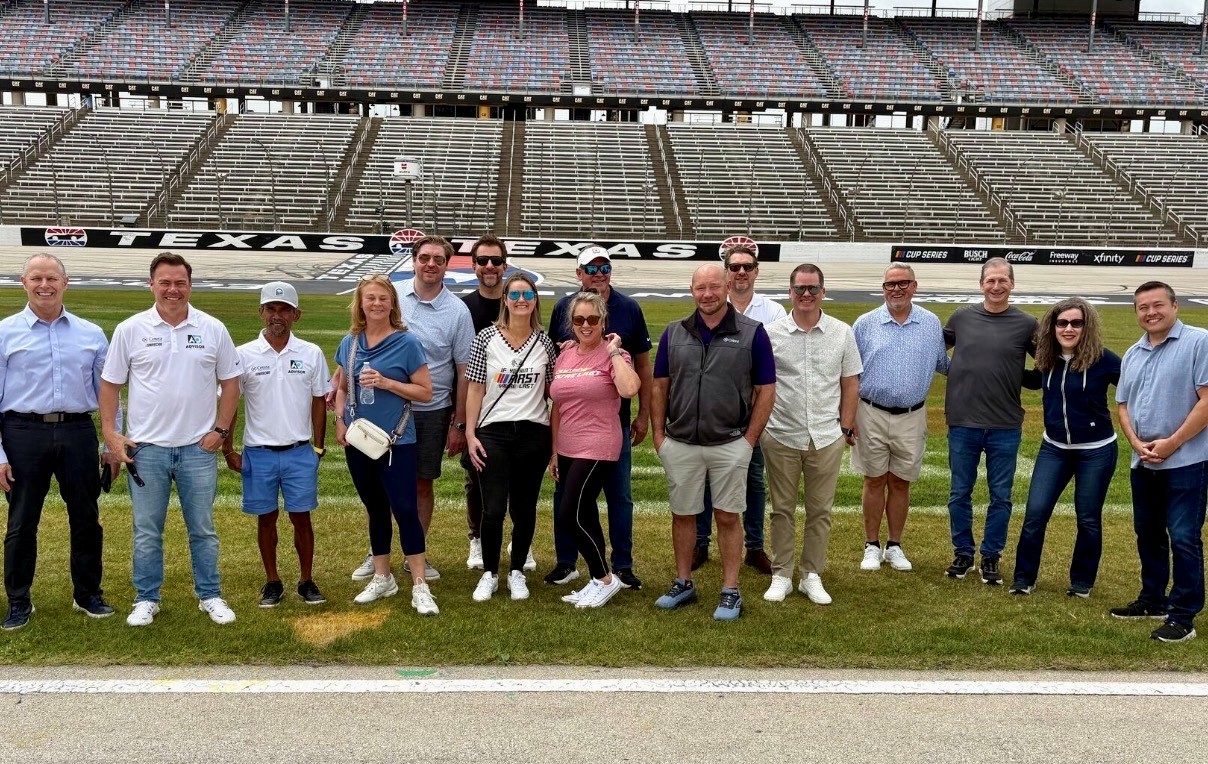
Advisor Outreach Attends Cetera Third Party Recruiting Event at Texas Motor Speedway By Chris Meinsen / Advisor Outreach In May, the Advisor Outreach team had the opportunity to attend the Cetera Third Party Recruiting event at Texas Motor Speedway in Dallas — and it was another great reminder of why Cetera continues to be one of the strongest and most respected partners in the independent wealth management space. Over the past several years, Advisor Outreach has worked closely with the Cetera team to help financial advisors and practices evaluate transition opportunities across their ecosystem. In 2026 alone, we already have dozens of advisors and teams moving forward with Cetera in various capacities, and momentum continues to build. While the racing experience itself was incredible, what stood out most throughout the event was the culture behind the organization. From leadership to recruiting to transition support, Cetera consistently demonstrates a genuine commitment to advisors and to the independent model. Spending time with their team in person only reinforced what we continue to hear from advisors across the country — that culture, accessibility, and flexibility matter now more than ever. One of the things we value most at Advisor Outreach is getting advisors into the right fit, and that requires strong relationships with firms that are truly invested in advisor success. Cetera continues to stand out in that regard. The event also provided a great opportunity to connect with other third-party recruiting firms, industry leaders, and consultants from across the country. Conversations throughout the week centered around advisor needs, transition trends, growth strategies, and how firms can continue improving the advisor experience in an increasingly competitive landscape. Of course, the NASCAR experience itself didn’t disappoint either. Whether it was standing trackside, touring pit road, or spending time with great people outside the normal day-to-day meetings and calls, the event created an atmosphere that was both fun and productive. And we would be remiss if we didn’t mention Frank LaRosa’s racing suit featuring the Elite Consulting branding on the back — which quickly became one of the highlights of the trip. Absolutely elite behavior. We want to sincerely thank the entire Cetera team for the hospitality, partnership, and continued trust in Advisor Outreach. We’re excited about what’s ahead and look forward to continuing to help advisors explore opportunities that align with their goals, culture, and long-term vision. Connect with us As a fully independent, unbiased, and transparent partner Advisor Outreach gives our clients clear guidance on the best fit for them, instead of leading to a firm that is the best fit for us. Talk to one of our advisors today to see how we can help you level up. Fill out the form below, and one of our experts will be in touch shortly. Stay Connected Sign up for updates and insights from our team of experts. www.advisoroutreach.comconnect@advisoroutreach.com 813.344.28805401 W Kennedy BlvdSuite 100Tampa FL 33609 Linkedin

The Truth About Third-Party Recruiting in the Advisor Space
The Truth About Third-Party Recruiting in the Advisor Space By Chris Meinsen / Advisor Outreach There are now well over 100 firms operating in the third-party recruiting space for financial advisors. On the surface, that sounds like a healthy, competitive environment. More options, more competition, better outcomes — at least that’s the assumption. But if you spend enough time talking to decision-makers inside the top broker-dealers — the people actually seeing deals come together — a very different reality starts to emerge. Despite the number of firms out there, only a small handful consistently deliver real value to advisors. In most cases, it’s the same four or five firms that are actually driving meaningful outcomes and acting as true advocates. So what’s behind that gap? A big part of it comes down to how easy it is to enter this business — and how difficult it is to actually build something sustainable. Every year, experienced recruiters leave broker-dealers with strong relationships and a belief that they can do it better on their own. And in many ways, they’re right about what could be improved. What they often underestimate is what it takes to build a real firm around that idea. This isn’t a business where you can just rely on your network and figure it out as you go. To build something that has reach, consistency, and credibility, you’re investing heavily from day one. Marketing alone can easily run over $150,000 a year if you want to stay competitive and visible. On top of that, there are costs for lead generation, CRM systems, support staff, travel, conferences, compliance, and insurance. It adds up quickly, and it’s ongoing. The reality is that most one-person recruiting shops don’t make it through their first year. Not because they aren’t capable, but because they run into the operational and financial realities of the business. More often than not, they end up joining established firms where that infrastructure already exists. The firms that do last — and more importantly, the ones that actually serve advisors well — tend to share a few common traits. They are built around relationships, not transactions. They care deeply about their reputation because they understand how small and connected this industry really is. And they reinvest back into the business constantly, whether that’s improving the advisor experience, strengthening partnerships, or building out the systems that support long-term growth. At the center of all of it is a simple idea: helping advisors find the right fit matters more than closing the next deal. One of the biggest misconceptions advisors run into is assuming that all “independent” recruiters operate the same way. In reality, many don’t. If a recruiter is only working with one or two firms and consistently steering conversations in that direction, they’re not really acting as an independent advocate. They’re representing those firms, whether it’s stated that way or not. True third-party recruiting should feel different. It should involve open conversations, real comparisons, and a willingness to tell an advisor when something isn’t the right move — even if that means no transaction happens. At Advisor Outreach, that’s always been the focus. We’ve had the opportunity to help place hundreds of advisors and teams, but what matters most to us isn’t the number of placements. It’s whether those moves actually made sense for the advisor. There are plenty of situations where we’ve told someone to stay where they are. There are others where we’ve connected advisors with firms we don’t even have direct relationships with, or partnered with other independent recruiters because they were better positioned to help. We’ve never felt the need to force a fit just to benefit our business. That approach has shaped how we’ve grown. We’ve been fortunate to attract strong people to our team — people who want to build something long-term and do things the right way. We try to be fair, transparent, and generous with our team because that’s what creates consistency, and consistency is what advisors ultimately feel. This space will continue to grow, and more firms will continue to enter it. But the number of firms isn’t what matters. What matters is whether the advisor on the other end is actually being represented the way they should be. That’s the difference between a transaction and true advocacy, and it’s something advisors should pay close attention to when they decide who to work with. Connect with us As a fully independent, unbiased, and transparent partner Advisor Outreach gives our clients clear guidance on the best fit for them, instead of leading to a firm that is the best fit for us. Talk to one of our advisors today to see how we can help you level up. Fill out the form below, and one of our experts will be in touch shortly. Stay Connected Sign up for updates and insights from our team of experts. www.advisoroutreach.comconnect@advisoroutreach.com 813.344.28805401 W Kennedy BlvdSuite 100Tampa FL 33609 Linkedin
Wealth Management 2026 Market Outlook
Wealth Management 2026 Market Outlook By Chris Meinsen / Advisor Outreach Connect with us As a fully independent, unbiased, and transparent partner Advisor Outreach gives our clients clear guidance on the best fit for them, instead of leading to a firm that is the best fit for us. Talk to one of our advisors today to see how we can help you level up. Fill out the form below, and one of our experts will be in touch shortly. Stay Connected Sign up for updates and insights from our team of experts. www.advisoroutreach.comconnect@advisoroutreach.com 813.344.28805401 W Kennedy BlvdSuite 100Tampa FL 33609 Linkedin

Financial Advisors Navigating Turbulent Times: Markets, Policy, and Strategic Positioning in 2026
Financial Advisors Navigating Turbulent Times: Markets, Policy, and Strategic Positioning in 2026 By Chris Meinsen / Advisor Outreach Advisors today are operating in an environment that feels simultaneously familiar and unprecedented — a mix of market volatility, political noise, and regulatory proposals that can move markets on perception alone. As we head further into 2026, the landscape is shaped not just by economic fundamentals but by policy uncertainty, legal challenges, and shifting investor psychology. From tariff policy under scrutiny by the Supreme Court to proposals that would cap credit card interest rates at 10%, and with midterm elections on the horizon, advisors must be prepared to help clients navigate both market volatility and policy risk. Supreme Court and Tariffs: A Legal Wildcard in the Market Last year’s expansive tariff proposals — part of a broader trade policy toolkit — drew both corporate and judicial pushback, culminating in legal challenges now before the Supreme Court. These cases question whether sweeping tariff authority exceeds executive powers. Even without a definitive ruling yet, many wealth managers are already treating the tariff litigation as noise relative to broader market drivers such as interest rates, inflation trends, and borrowing costs. Still, the mere existence of this uncertainty reinforces a larger truth: legal and policy risk is now a meaningful part of market volatility. Advisors who can help clients distinguish between transitory headline risk and underlying economic signals are providing real value. Proposed 10% Credit Card Interest Cap: Market and Policy Shockwaves In early January 2026, President Trump renewed a push to cap credit card interest rates at 10% for one year — a dramatic proposal that rattled financial markets and sparked selloffs in major bank and credit card stocks. Analysts and bank executives have widely criticized the idea, warning it could restrict credit access, limit rewards offerings, and squeeze profitability if implemented as proposed. What’s striking isn’t just the policy itself, but how quickly markets reacted to the perception of regulatory risk — even as many experts question the proposal’s legislative viability. For advisors, this highlights two key realities: Markets increasingly price in policy and political risk ahead of legislative certainty. Advisors should prepare for sharp moves based on ideas that may never become law, but which nonetheless reshape risk sentiment. Midterm Dynamics and Market Sentiment Every election cycle brings a period of uncertainty, but midterms in 2026 are poised to have an outsized impact on investor psychology. With control of Congress, regulatory priorities, and fiscal direction at play, markets could become more sensitive to news flow, polling data, and policy promises. Rather than attempting to “time” politics, seasoned advisors are focusing on: Diversification strategies across sectors and asset types Scenario planning for policy outcomes Stress-testing client portfolios for event risk In other words, advisors who can calmly anchor clients through turbulent headlines will build trust and retention. Market Trends: Calm and Chaos in Tandem Despite headline risk, equity markets have shown resilience, with both broad indices and many earnings reports demonstrating underlying strength. Yet futures and financial stocks have shown sensitivity to news such as regulatory proposals and leadership scrutiny at key institutions. This dynamic — fundamentals that remain intact but are punctuated by headline sensitivity — suggests that the market is neither in a traditional bull market nor an outright bear market, but rather in a phase of heightened dispersion and selectivity. Advisors may find opportunities in relative value strategies, sector rotation, and disciplined rebalancing. Perspective from the Market: Buffett and Dimon Warren Buffett has famously said, “Be fearful when others are greedy and greedy when others are fearful.” This sentiment rings especially true in periods when policy headlines, rather than economic fundamentals, dominate news cycles. Similarly, Jamie Dimon and other industry leaders have pushed back on policy proposals they see as destabilizing, emphasizing the need for long-term economic stability and measured regulatory frameworks. Their public stance reminds investors that institutional confidence and credit availability are central to sustainable growth. The Advisor’s Role: Calm in the Chaos Today’s environment isn’t just about markets going up or down — it’s about narratives driving behavior. Policy proposals like interest rate caps or tariff disputes may or may not materialize as actual law, but they influence expectations, valuations, and risk appetite. Advisors who can: Distinguish noise from signal Ground client expectations in facts, not fear Provide context around political risk And reinforce long-term planning disciplineare offering true value beyond portfolio performance. Locking in Career Moves as a Hedge Against Uncertainty In volatile times like these — when policy risk, legal proceedings, and market swings are part of the daily news cycle — planning your own professional trajectory strategically can serve as a hedge as well. For advisors considering a transition, one often overlooked fact is that offers to change firms or platforms remain valid for extended periods (commonly six months or longer). Locking in an opportunity now — when both firms and advisors are thinking strategically — can provide a form of professional insurance against future regulatory or market uncertainty. Just as we help clients build resilient portfolios, advisors can benefit from resilient career planning: aligning with firms whose support systems, service cultures, and long-term strategies match their own. In an era where headlines can turn rapidly, having a secure plan in place — whether markets go up, down, or sideways — is a powerful source of confidence. Bottom line: turbulent times demand not only investment discipline but strategic foresight — both for clients’ portfolios and for your own professional path. Focus on fundamentals, be prepared for volatility, and remember that planning now can protect you later. Connect with us As a fully independent, unbiased, and transparent partner Advisor Outreach gives our clients clear guidance on the best fit for them, instead of leading to a firm that is the best fit for us. Talk to one of our advisors today to see how we can help you level up. Fill out the form below, and one of our experts will be in touch shortly.

The 20 Most Talked-About News Stories of 2025 — And Why They Stopped Us All Mid-Scroll
The 20 Most Talked-About News Stories of 2025 — And Why They Stopped Us All Mid-Scroll By Chris Meinsen / Advisor Outreach Every year has headlines. But some years have moments — stories that cut through the noise and became unavoidable. 2025 was one of those years. These weren’t just news alerts. They were the stories people argued about in group texts, shared in Slack channels, debated at dinner, and scrolled past at midnight thinking, “Wait… what?” Here are the 20 most talked-about news stories of 2025 — and why each one mattered more than the headline itself. Wildfires tore through parts of Los Angeles, becoming one of the costliest disasters in U.S. history This wasn’t “climate change somewhere else.” This was prime neighborhoods, major highways, and everyday life disrupted. For many Americans, 2025 was the year climate risk stopped being abstract and started feeling personal. Donald Trump was inaugurated as President Regardless of politics, this was the defining backdrop of the year. Policy shifts, court battles, protests, and nonstop media coverage shaped everything from markets to culture to dinner-table conversations. Exhaustion became bipartisan. Thailand legalized same-sex marriage In a year dominated by conflict and division, this stood out as a clean, hopeful milestone — and a reminder that progress often comes quietly, without fanfare, and outside the usual Western spotlight. A deadly stampede at India’s Kumbh Mela festival killed dozens One of the world’s largest religious gatherings became a sobering reminder of how fragile safety systems can be when crowds, infrastructure, and pressure collide. Beyoncé won Album of the Year for Cowboy Carter This wasn’t just a Grammy moment — it was a culture reset. Genre lines officially blurred, and the conversation shifted from “Is this allowed?” to “Why did we ever limit it?” The U.S. imposed new tariffs on China, escalating trade tensions This headline rippled far beyond politics. Supply chains, prices, and global relationships all felt the impact, reminding people how interconnected — and fragile — the global economy really is. The Philadelphia Eagles defeated the Kansas City Chiefs in Super Bowl LIX In a fragmented media world, the Super Bowl proved it’s still one of the last true shared national moments. Love it or hate it, everyone knew the score. Anora dominated the Academy Awards The Oscars had been searching for relevance. In 2025, they found it — sparking debate about storytelling, taste, and what audiences actually want from Hollywood now. Firefly Aerospace successfully landed a commercial spacecraft on the Moon This was a quiet but historic shift: space exploration officially moved from governments to companies. The new space race doesn’t wear flags — it wears logos. Astronauts Sunita Williams and Barry Wilmore returned after an unexpectedly long stay in space A human story inside a technical one. Plans changed. Systems failed. People adapted. The world watched — and remembered how unforgiving space still is. The Catholic Church elected its first American pope Some institutions move slowly… until suddenly they don’t. This was one of those history-book moments that sparked global debate about tradition, change, and leadership. A Pop Mart toy called “Labubu” became a global obsession Seemingly overnight, a niche collectible exploded into mainstream culture. It was a perfect example of how the internet can turn anything into a movement — fast. Katy Perry went to space on a Blue Origin flight Was it inspiring? Ridiculous? Both? Either way, it dominated timelines and perfectly captured 2025’s blend of tech, celebrity, and spectacle. Japan named its first female prime minister Representation stories still matter — not because they’re symbolic, but because they quietly reset what leadership looks like in places long defined by tradition. The Los Angeles Dodgers won the World Series behind Shohei Ohtani Sports and celebrity fully merged in 2025. Ohtani wasn’t just an athlete — he was a global brand pulling casual fans into the story. The Grand Egyptian Museum officially opened Amid crisis and chaos, this headline reminded people that humanity still builds big, ambitious, beautiful things — and that wonder hasn’t disappeared. A powerful typhoon killed hundreds across Southeast Asia Another reminder that extreme weather wasn’t an outlier in 2025 — it was a pattern. Disaster headlines became disturbingly routine. The longest U.S. government shutdown in history finally ended Forty-three days of dysfunction highlighted how fragile “normal operations” can be when compromise isn’t rewarded. The United States minted its final penny A small headline with big symbolism. 2025 had many “end of an era” moments — and this one strangely resonated. Merriam-Webster named “slop” its Word of the Year AI content overload. Low-quality noise. Digital fatigue. One word managed to capture the internet’s collective frustration better than any think piece could. Final Thought 2025 wasn’t defined by one single moment. It was defined by contrast — progress and fatigue, innovation and overload, spectacle and seriousness — all happening at once. If there’s a takeaway, it’s this: People are paying closer attention to what actually matters… and tuning out everything else. Curious which of these stuck with you the most — or which one you think will still matter five years from now? Connect with us As a fully independent, unbiased, and transparent partner Advisor Outreach gives our clients clear guidance on the best fit for them, instead of leading to a firm that is the best fit for us. Talk to one of our advisors today to see how we can help you level up. Fill out the form below, and one of our experts will be in touch shortly. Stay Connected Sign up for updates and insights from our team of experts. www.advisoroutreach.comconnect@advisoroutreach.com 813.344.28801408 N Westshore BlvdSuite 401Tampa FL 33607 Linkedin Twitter

2026 Recruiting Outlook
2026 Recruiting Outlook What Financial Advisors Will Be Looking For in 2026: Culture, Service, Stability, and Smarter Transitions By: Chris Meinsen / Advisor Outreach Every year, AdvisorHub, WealthManagement.com, and other industry sources track advisor movement — where they’re going, why they’re leaving, and what matters most in a transition. But something has shifted over the last 12–18 months, and 2026 is shaping up to be a year defined not just by payouts or transition money, but by a much deeper, more thoughtful decision-making process. Across thousands of advisor conversations, including the countless hours our team (especially Soch Chay) has spent speaking directly with advisors every week, a clearer picture is emerging: advisors are becoming more prudent, more selective, and more focused on long-term fit than ever before. Below is what we see coming in 2026, based on direct advisor sentiment and continuous monitoring of industry coverage. Culture and Service Have Become More Important Than Money In years past, recruiting stories in AdvisorHub or WealthManagement.com were dominated by grid payouts, signing bonuses, and headline transition packages. Those remain relevant — but the tone has unmistakably shifted. Advisors entering 2026 are increasingly asking: “Who will take care of my clients the way I do?” “Which firm actually supports my day-to-day business?” “What is the service culture really like once I’m onboarded?” We’re seeing far fewer advisors lead with compensation questions and far more digging into: Platform stability Back-office responsiveness Compliance partnership Transition support Practice management resources Relationship depth with leadership Service and culture have become differentiators — not afterthoughts. The “Everyone Goes to LPL” Trend Is Fading For the past decade, LPL was the default destination mentioned in nearly every independent-transition story. But advisors in 2024–2025 began examining their options more carefully, and that prudence is accelerating into 2026. Advisors still respect LPL’s scale, but they are no longer treating it as a foregone conclusion. Instead, they’re comparing: Osaic Cetera Raymond James Kestra Sanctuary Ameriprise Select RIAs and hybrid platforms The mindset has changed from “Where is everyone else going?” to “Where will I thrive long-term?” Osaic Has Found Its Footing — and Advisors Are Noticing One of the recurring themes we’re hearing is that Osaic has turned a corner. The consolidation period was bumpy, but 2025 brought clarity, consistency, and real momentum. Advisors are reporting: Improved service Stronger leadership stability Better technology alignment Clearer value proposition Renewed recruiting energy Heading into 2026, Osaic has positioned itself as a legitimate contender for advisors seeking independence with structure — and advisors are responding positively. Conference Season Didn’t Spark the Typical Jump — But Movement Has Been Steadily Rising All Year Historically, conference season triggers a wave of advisor conversations. But this year was different. Instead of a sudden spike, we saw: A steady rise in advisor exploration all year A growing number of “quiet conversations” Advisors doing deeper due diligence More structured evaluation processes A higher volume of mid-year, mid-quarter moves than normal This shift suggests that 2026 won’t be defined by isolated bursts of activity — it will be a year-long transition cycle. Advisors Are Asking Deeper Questions — And Spending More Time Evaluating Fit Our team sees this firsthand. Soch alone spends hours every week diving into advisor-specific needs, helping them compare platforms, understand payout structures, and realistically assess the long-term impact of each move. These conversations are more: Detailed Analytical Personalized Compliance-aware Growth-focused Advisors are acting more like informed consumers than ever — and the firms prepared to answer their real questions are the ones winning. “Anyone Can Do Recruiting” Is a Myth — and 90% of Newcomers Fail Every year, we see former advisors or consultants attempting to jump into the recruiting space, assuming it’s straightforward. It isn’t. The truth is: Roughly 90% of new or solo recruiters fail to get traction Most underestimate the time and skill required to gain advisor trust Many never build the infrastructure or relationships needed to place advisors successfully A large number disappear after 6–12 months Meanwhile, a small group of firms — including Advisor Outreach — have built reputations for consistency, transparency, and advisor-first guidance. Advisors are becoming far more aware of this distinction — and they are gravitating toward established, trusted partners rather than newcomers. What We Expect to See in 2026 Based on advisor sentiment, competitive movement, platform evolution, and the steady pace of transitions this year, here is what we anticipate: ✓ More advisors prioritizing culture and service over payouts ✓ Continued multi-firm comparison instead of “LPL by default” ✓ Rising interest in Osaic, Cetera, and other revitalized platforms ✓ A steady, year-long transition cycle instead of seasonal spikes ✓ Increased demand for objective, informed recruiting support ✓ Greater scrutiny of firms promising unrealistic transition deals ✓ More movement among mid-to-large practices seeking stability ✓ A record number of advisors taking first meetings quietly, before making public moves 2026 is shaping up to be a year defined not by speculation — but by intentionality. Final Thoughts The advisor-transition landscape is maturing. Advisors expect more clarity, more service, and more thoughtful partnership than ever before. And they’re looking for firms — and recruiting partners — who can help them navigate the decision with confidence. At Advisor Outreach, our mission remains simple:Help advisors make informed, strategic decisions about their future — with no pressure, no bias, and complete confidentiality. If you’re considering a move in 2026, now is the time to start the conversation. Connect with us As a fully independent, unbiased, and transparent partner Advisor Outreach gives our clients clear guidance on the best fit for them, instead of leading to a firm that is the best fit for us. Talk to one of our advisors today to see how we can help you level up. Fill out the form below, and one of our experts will be in touch shortly. Stay Connected Sign up for updates and insights from our team of experts. www.advisoroutreach.comconnect@advisoroutreach.com 813.344.28801408 N Westshore BlvdSuite 401Tampa FL 33607

Why Stock Picking Might Outperform ETFs in the Next 12 Months
Why Stock Picking Might Outperform ETFs in the Next 12 Months For much of the past decade, investors were told: “Don’t bother picking stocks—just buy the index.” Passive ETFs and mutual funds won the spotlight thanks to their low costs, diversification, and simplicity. But the setup for the next year looks very different. Dispersion is widening, leadership is rotating, and macro shifts are creating cracks in broad benchmarks. For disciplined advisors and investors, this could finally be a stock picker’s market again. Leadership Is Broadening Beyond Mega-Caps For years, a small group of companies—the so-called “Magnificent 7”—carried index performance. If you owned the S&P 500, most of your return was coming from Apple, Microsoft, Amazon, Nvidia, Meta, Tesla, and Alphabet. That kind of narrow leadership works great for passive investors if those companies keep delivering. But when just a handful of names drive the index, it leaves investors exposed to concentrated risks. Now, signs are emerging that the baton is being passed to mid-caps, cyclicals, financials, and under-owned sectors. As more companies participate in the rally, dispersion of returns naturally rises. This is the environment where active stock selection can add real value. Dispersion Creates Opportunity Dispersion means the gap between winners and losers is widening. In an environment where everything moves together, stock picking adds little. But when some stocks rally 40% while others sink 20%, the ability to overweight winners and avoid losers is critical. Advisors who understand fundamentals—balance sheets, cash flow quality, pricing power, management discipline—are well positioned to separate long-term compounders from companies set to stumble. Passive vehicles can’t make those choices. They own the good, the bad, and everything in between. Macro Shifts Are Amplifying Stock-Specific Risks We’re in a macro backdrop where interest rates, inflation expectations, and monetary policy are in flux. A cooling inflation trend and anticipated rate cuts could boost companies that are more rate-sensitive, while leaving heavily indebted or structurally challenged firms behind. Add in trade tensions, shifting global supply chains, and the energy transition, and you have a landscape where stock-by-stock fundamentals matter more than ever. Passive funds simply don’t discriminate—they allocate capital based on index weight, not merit. Active Products Are Evolving Another tailwind for stock pickers is the rise of active ETFs and other low-cost, rules-based strategies that blend the benefits of selectivity with transparency and efficiency. These products show that investors are seeking more than “just the market.” Advisors can now harness active stock selection without the high fees and lack of liquidity that plagued traditional active mutual funds. That makes it easier to implement conviction-driven ideas while still keeping client costs reasonable. Passive Fatigue Is Setting In Some investors are growing frustrated with “average” results. Passive investing guarantees you the market return—no more, no less. That’s fine in broad bull markets, but when volatility spikes or leadership narrows, those averages look less attractive. Meanwhile, index funds are increasingly concentrated in mega-caps. If one or two of those names falter, index investors feel it directly. Active managers, or disciplined individual investors, have the option to sidestep those risks. The Psychology of Investing Finally, there’s a psychological angle. Passive investing can leave clients feeling disengaged, like passengers on autopilot. Active stock selection—done thoughtfully—keeps them invested in the narrative of businesses, leadership, and long-term growth stories. That engagement can strengthen trust between advisors and their clients, especially when volatility tests patience. The Bottom Line Passive strategies still have their place—especially as a low-cost core. But over the next 12 months, conditions are shaping up in a way that favors selectivity. Dispersion is increasing, macro trends are reshuffling winners and losers, and active approaches have more tools than ever before. For financial advisors, this is a moment to consider tilting more toward stock picking. Done well, it could mean the difference between riding the market and beating it. Connect with us As a fully independent, unbiased, and transparent partner Advisor Outreach gives our clients clear guidance on the best fit for them, instead of leading to a firm that is the best fit for us. Talk to one of our advisors today to see how we can help you level up. Fill out the form below, and one of our experts will be in touch shortly. Stay Connected Sign up for updates and insights from our team of experts. www.advisoroutreach.comconnect@advisoroutreach.com 813.344.28801408 N Westshore BlvdSuite 401Tampa FL 33607 Linkedin Twitter

Rising Advisor Turnover: A Warning Sign for RIA Talent Strategy
Rising Advisor Turnover: A Warning Sign for RIA Talent Strategy A recent DeVoe & Company report highlights a troubling trend: advisor turnover among independent RIAs is climbing sharply. Nearly 10% of firms experienced “much higher” attrition, while another 20% saw “somewhat higher” advisor exits—compared to just 2% and 14%, respectively, in last year’s report. The Root Cause: A Talent Development Breakdown According to DeVoe’s 2025 Talent & Growth Survey, advisory firms are falling behind when it comes to building sustainable career paths. Among the key findings: A majority (68%) of next-gen advisors prioritize a well-defined career path. Nearly half (46%) are seeking a clear path to ownership. One-third want more formal coaching and training. However, far too many firms are failing to deliver: Only 40% of RIAs reported having adequate training programs. Just 38% now have clearly articulated career paths—dating down from 50% last year and nearly 60% two years ago. Many instead rely on informal or ad hoc development—sometimes none at all. DeVoe bluntly terms the situation: “Firms are slipping backward on the fundamentals of people development,” producing a “drift toward mediocrity.” Consequences for Firm Leadership & Succession The lack of structured career planning isn’t just hurting retention—it’s foreshadowing succession chaos. Only 27% of firms feel they have next-gen talent ready to step into leadership. Meanwhile, 44% predict a “bumpy transition” ahead. DeVoe’s advice is clear: firms serious about long-term stability should start selling equity early and begin building internal leadership pipelines before it’s too late. Why Advisor Outreach Believes Talent Development Wins Though this report wasn’t written with recruiting firms in mind, the implications are plain. At Advisor Outreach, we’ve built our reputation by recognizing and solving for things like this—before they become crises. We don’t just help advisors navigate broker-dealer transitions. We help them position themselves for long-term growth: Guaranteed clarity: We only introduce advisors to firms that prioritize transparency—especially around growth, equity and succession structures. Career growth, not just comp: The best transitions go beyond money. They deliver development, ownership, and a clear path forward. Peace of mind with partners: So many advisors tell us they’ve been underserved by repeated “no path” responses. We make sure that’s not how our process goes. In Summary The talent crisis in RIA firms is real—and growing. If your firm hasn’t clearly mapped out long-term growth paths and succession, advisors will—and should—look elsewhere. At Advisor Outreach, we don’t just offer a new home. We help secure a future. Connect with us As a fully independent, unbiased, and transparent partner Advisor Outreach gives our clients clear guidance on the best fit for them, instead of leading to a firm that is the best fit for us. Talk to one of our advisors today to see how we can help you level up. Fill out the form below, and one of our experts will be in touch shortly. Stay Connected Sign up for updates and insights from our team of experts. www.advisoroutreach.comconnect@advisoroutreach.com 813.344.28801408 N Westshore BlvdSuite 401Tampa FL 33607 Linkedin Twitter

Why Advisors Choose Advisor Outreach for Broker-Dealer Transitions
Why Advisors Choose Advisor Outreach for Broker-Dealer Transitions When it comes to changing broker-dealers, financial advisors face a complex and often emotional decision. From payout structures and client portability to cultural fit and long-term career goals, there are countless variables to evaluate. That’s why more advisors are turning to specialized third-party recruiting firms like Advisor Outreach to guide them through the process. Here’s why Advisor Outreach stands out—and why having an advocate matters. Objective Guidance, Not Sales PitchesAt Advisor Outreach, we aren’t employed by any one firm. Our loyalty is to you. That independence allows us to match advisors with the broker-dealer or RIA platform that aligns with their goals—not one we’re obligated to push. You get transparent insight, not a hard sell. Access to a Broad Network of FirmsWe maintain relationships with top independent broker-dealers, RIA aggregators, and hybrid platforms across the country. This allows us to present you with vetted options you may not discover on your own. We do the legwork to make sure each firm meets your criteria. Confidential, Streamlined ProcessOne of the biggest risks in transitioning is word getting out before you’re ready. We protect your confidentiality every step of the way. Our streamlined process minimizes distractions and lets you focus on your clients while we handle the research and outreach. Strategic Advocacy During NegotiationsCompensation, transition packages, and platform flexibility can all be negotiated—but many advisors don’t know what’s possible. We do. As your advocate, we help ensure you get the most competitive deal available, backed by data and experience. Advisor-Centric PhilosophyWe’re not just recruiters. We’re consultants, sounding boards, and long-term partners. Our team has deep industry knowledge and understands the personal and professional stakes of making a move. We treat each advisor relationship with care, respect, and discretion. Start Exploring the Possibilities Whether you’re actively considering a move or just want to explore what else is out there, Advisor Outreach is here to help. Our services are confidential and free to advisors. Book a Discovery Call with Our Team by filling out the form below. Choosing to change broker-dealers is a big step. Let us walk with you and make it easier. Connect with us As a fully independent, unbiased, and transparent partner Advisor Outreach gives our clients clear guidance on the best fit for them, instead of leading to a firm that is the best fit for us. Talk to one of our advisors today to see how we can help you level up. Fill out the form below, and one of our experts will be in touch shortly. Stay Connected Sign up for updates and insights from our team of experts. www.advisoroutreach.comconnect@advisoroutreach.com 813.344.28801408 N Westshore BlvdSuite 401Tampa FL 33607 Linkedin Twitter

Top Broker-Dealers Advisors Are Moving to in 2025
Top Broker-Dealers Advisors Are Moving to in 2025 The financial advisor landscape continues to evolve rapidly in 2025, and with that change comes movement. Advisors are reevaluating their affiliations in favor of more flexible, tech-forward, and advisor-centric platforms. Here are the top broker-dealers and platforms attracting the most advisor transitions so far this year. LPL FinancialLPL remains a powerhouse in advisor transitions. With significant wins in 2025—including $190M and $450M teams from Osaic—LPL’s blend of autonomy, scale, and strong technology continues to appeal to independent-minded advisors. Their acquisition of Commonwealth, bringing nearly 3,000 advisors and $285B AUM, only strengthens their appeal. Raymond JamesA consistent favorite, Raymond James brought on nine teams totaling $3.6B in AUM by April 2025. Advisors are drawn to its balanced culture, top-tier support, and strong reputation for advisor satisfaction. Cetera Financial GroupCetera is gaining momentum with a wide range of affiliation models and strong M&A strategy. Their recent integration of Securian Financial and targeted recruiting efforts have helped attract advisors seeking scale, support, and semi-independence. Osaic (formerly Advisor Group)Osaic is building a cohesive brand from its multi-firm history and continues to see movement both in and out. Some large teams have departed for more independence, but others are drawn to its resources, backend support, and size. Stifel FinancialStifel continues to recruit effectively from the wirehouses. Recent transitions include a $3B Merrill team and an $873M team from UBS. Advisors appreciate Stifel’s boutique feel with national resources and cultural alignment. Rockefeller Capital ManagementRockefeller is building serious momentum, especially among high-AUM teams. In early 2025, they added $1.5B in new assets via two Merrill Lynch teams in Chicago. Their elite-family-office positioning and client-first values are a major draw. Sanctuary WealthSanctuary is attracting advisors looking for full independence without building infrastructure from scratch. With strong technology partnerships and white-glove transition support, it’s become a top destination for breakaway teams. Kestra FinancialKestra offers flexible affiliation options—both hybrid and RIA support—making it attractive to advisors who want independence with infrastructure. Their focus on technology and advisor support has made them a steady contender in 2025. Morgan StanleyWhile known as a wirehouse, Morgan Stanley continues to attract top-producing teams, like an $875M team from JPMorgan. Their strong platform remains a contender, although some attrition toward independence is noticeable. RBC Wealth ManagementRBC made a splash by onboarding a $5B JPMorgan team and a $500M team from Merrill. With a balance of boutique feel and robust resources, RBC is quietly climbing the ranks for advisors looking for flexibility with support. UBS and Wells FargoThese traditional powerhouses still make moves, with UBS picking up $400M+ teams from Morgan Stanley and Wells Fargo growing its independent channel. That said, both are also seeing outflows to more modern, independent platforms. Key Takeaways Independence wins. Firms like LPL, Cetera, Kestra, and Sanctuary are gaining attention from advisors seeking autonomy, payout control, and flexible tech. Cultural fit matters. Firms with consistent values, leadership, and support structures are pulling ahead. RIA platforms are rising. While not broker-dealers, custodians like Schwab and Fidelity are gaining from the shift toward fee-based independence. Why It Matters For advisors considering a change, these trends offer a real-world roadmap. Looking at where others are going helps you assess what might be right for you. At Advisor Outreach, we track these movements and help advisors transition smoothly, strategically, and confidentially. Explore Your Options with a Free Consultation by Filling Out the Form Below 2025 is already a banner year for transitions. If you’re wondering whether to make a move, we can help you evaluate your options and find the best-fit platform for your next chapter. Connect with us As a fully independent, unbiased, and transparent partner Advisor Outreach gives our clients clear guidance on the best fit for them, instead of leading to a firm that is the best fit for us. Talk to one of our advisors today to see how we can help you level up. Fill out the form below, and one of our experts will be in touch shortly. Stay Connected Sign up for updates and insights from our team of experts. www.advisoroutreach.comconnect@advisoroutreach.com 813.344.28801408 N Westshore BlvdSuite 401Tampa FL 33607 Linkedin Twitter